Research & Guides
, Chief Marketing Officer
A four-month trial in Whitehead, Northern Ireland tested digital recording and rewarding of recycling, with research by Queen’s University Belfast.

In 2020, Reward4Waste was tested in Whitehead, Northern Ireland, in its first public proof-of-concept trial. The four-month project tested whether uniquely coded packaging could work alongside existing household and public recycling infrastructure, while giving consumers a digital way to record recycling and receive a reward.
The trial ran from 30 September 2020 to 31 January 2021 in Whitehead, a self-contained town of around 2,000 households.
It was run in collaboration with Bryson Recycling and Mid and East Antrim Borough Council, with support from Britvic Ireland, PepsiCo and Encirc. Queen’s University Belfast subsequently assessed the trial and conducted research into consumer attitudes towards recycling, deposit return schemes, digital DRS and Reward4Waste.
Importantly, this was a proof-of-concept trial rather than a live deposit return scheme. No deposit was placed on participating items. Consumers received rewards for recycling, while the report stated that subsequent trials would test the deposit-and-return function.
How the Whitehead trial worked
Participating drinks containers carried unique stickers and could be purchased from a local SPAR store.
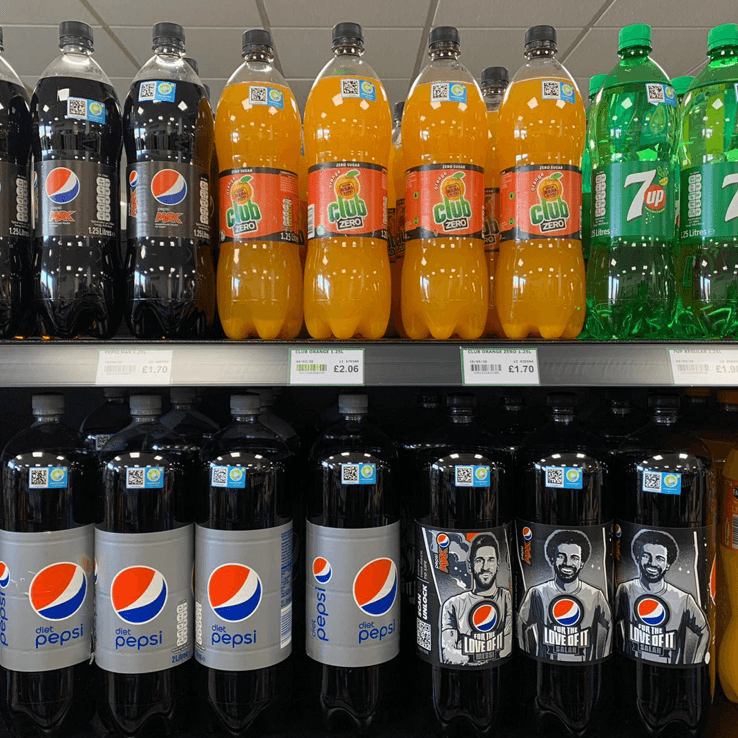
The trial covered plastic drinks bottles, including soft-drink and HDPE milk bottles, drinks cans and glass.
Residents downloaded the Reward4Waste app and scanned the unique code on their recycling container or an out-of-home bin, followed by the code on the drinks container they were recycling.
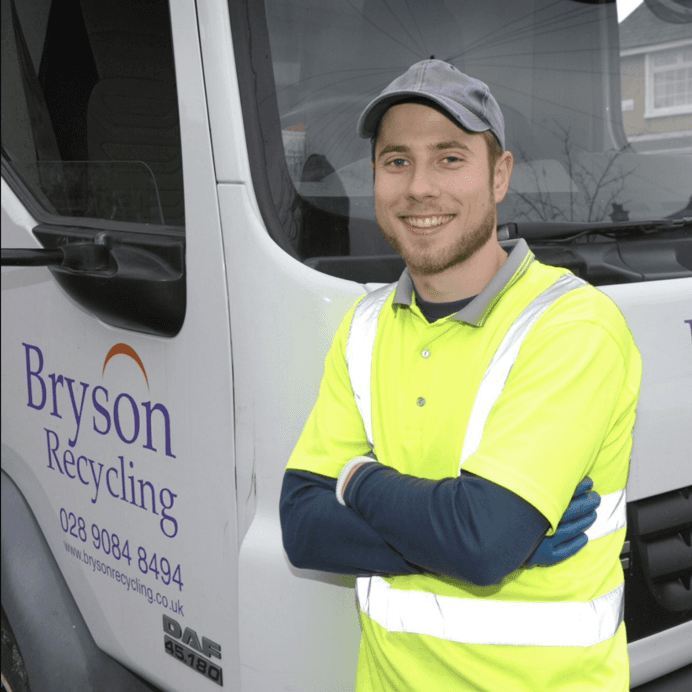
Recycling could take place through the existing weekly kerbside collection or through four participating out-of-home bins located in litter hotspots.
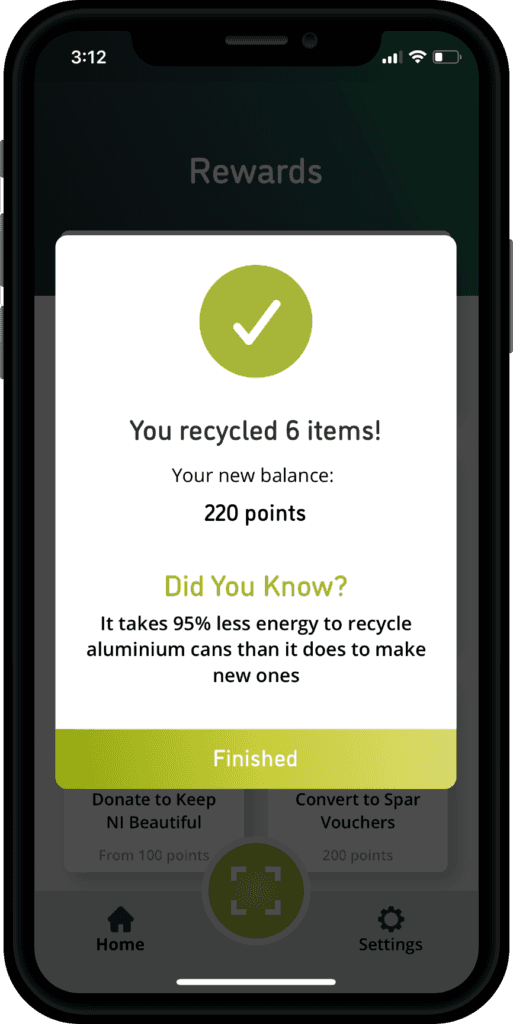
Users could redeem their rewards for SPAR vouchers or donate them to charity.
This meant the trial could test a digital recycling model alongside infrastructure that residents were already using, rather than requiring all participating containers to be returned to a dedicated reverse vending machine.
How the research was conducted
The assessment brought together several pieces of research.
A pre-trial online questionnaire was completed by 77 Whitehead residents in September 2020. All had registered for the trial before it began. The research was carried out by CryptoCycle and the results were provided to Queen’s University Belfast for analysis.
A post-trial online questionnaire was conducted by Queen’s University Belfast’s Psychology Department in January and February 2021. It included 110 respondents from Northern Ireland, of whom 67 lived in Whitehead and 43 had participated in the Reward4Waste trial.
The research also included five focus groups involving 17 respondents. Participants included people who had taken part in the trial, Whitehead residents who had not participated and people living outside Whitehead.
The majority of respondents in the post-trial questionnaire considered themselves committed recyclers, so the findings should be understood in the context of the people who participated rather than treated as representative of the entire UK population.
Recycling at home was already seen as convenient
The pre-trial research found that 85% of respondents said they found it easy to recycle at home.
At the same time, the research identified gaps in people’s understanding of what happened after their recycling was collected:
60% said they had no idea what happened to their recycling.
75% said they were often confused about what could and could not be recycled.
35% said they would recycle more if they knew what happened to their recycling.
The findings suggested that convenience was already an important part of people’s recycling behaviour, while better information and engagement could potentially improve participation further.
Convenience was a major concern with conventional DRS
When respondents were asked about a conventional reverse-vending-machine-based deposit return scheme, convenience emerged as a significant concern.
In the pre-trial questionnaire:
86% reported concerns about using a conventional DRS.
66% said they would not find a conventional DRS convenient.
20% said they did not want to use a conventional DRS at all.
Only 6% described a conventional DRS as convenient or very convenient.
The focus groups provided more context around these concerns.
Participants discussed the inconvenience of storing containers and taking them to a separate return point, particularly for people without cars, people living in apartments and people with limited mobility.
Some participants also questioned the environmental impact of making additional journeys specifically to return containers.
These were perceptions expressed by research participants rather than an environmental assessment of conventional DRS infrastructure, but they demonstrate how strongly convenience influenced attitudes towards different return models.
70% said they would prefer to recycle at home
The post-trial research asked respondents whether they would prefer to recycle their waste at home rather than take it to a reverse vending machine, retailer or central return point.
70% strongly agreed or agreed that they would prefer to recycle at home.
A further 25% were unsure, while only 5% strongly disagreed or disagreed and therefore indicated a preference for using an RVM.
The research also found that respondents perceived digital DRS as requiring less effort and being more appealing to use than a conventional model.
Respondents supported the principle of deposit return
Despite concerns about the convenience of conventional return models, respondents were broadly positive about the principle of a Deposit Return Scheme.
In the post-trial questionnaire:
86.3% said they thought a DRS was a good idea.
90.3% thought a DRS would benefit the environment.
87.1% said they would like a DRS to extend to other plastic waste.
The research therefore suggested that concerns were focused less on the principle of deposit return itself and more on how consumers would interact with the system.
A lower deposit was required to motivate respondents under the digital model
The research also asked what minimum deposit would be needed to motivate respondents to recycle under each type of scheme.
The report presented 21p for a digital DRS compared with 30p for a conventional DRS, interpreting the difference as an indication of greater acceptance of the digital approach among respondents.
These figures should be understood as responses to the research question about the minimum motivating deposit, rather than actual deposits used during the Whitehead trial. The Whitehead proof of concept itself was reward-based and did not place deposits on participating containers.
Participants found Reward4Waste easy to use
Feedback from people who used Reward4Waste during the trial was positive.
The post-trial research reported that respondents agreed or strongly agreed that they found the app easy to download and use.
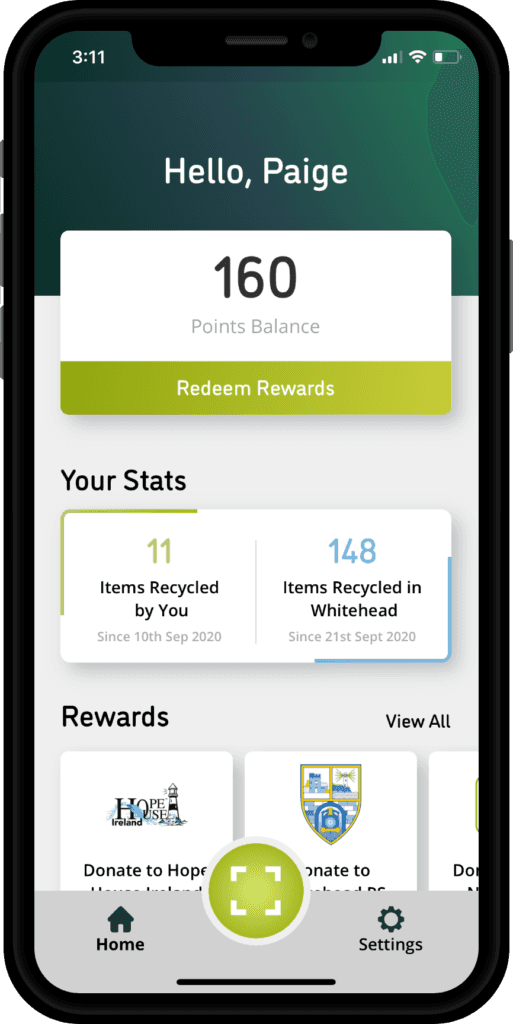
Focus-group participants who had taken part in the trial also described Reward4Waste as easy and convenient to use. Positive themes included the app layout, ease of scanning, rewards for recycling, charity donations and being able to see community participation.
The research also identified areas for improvement, including greater awareness of the trial, participation by more stores and more reliable application of unique codes to participating products.
The report recommended that a larger trial should use a more robust method of applying unique codes, such as coding at the point of manufacture.
What did the Whitehead trial tell us?
Whitehead was a limited proof-of-concept trial and its findings should be treated accordingly.
It did not test a full national DRS and did not charge consumers a deposit. Its research participants were also disproportionately people who considered themselves committed recyclers.
Within those limitations, the research produced several useful findings.
Consumers participating in the research placed significant value on convenience. Recycling at home was strongly preferred to travelling to a dedicated return point, while participants raised concerns about accessibility, storage and additional journeys under a conventional return model.
At the same time, respondents were strongly supportive of the underlying principle of a Deposit Return Scheme.
For Reward4Waste specifically, the trial demonstrated that participants could use a digital system alongside existing kerbside and out-of-home recycling infrastructure, and feedback from users of the app was positive.
The report concluded that the Whitehead trial had demonstrated a proof of concept for Reward4Waste and provided a platform for further trials.
From Reward4Waste to re-universe
The technology tested in Whitehead was Reward4Waste, created by CryptoCycle. The 2021 assessment itself identifies re-universe as “previously Reward4Waste”.
The Whitehead project should therefore be understood as an early proof of concept for technology that preceded the current re-universe platform.
The product and proposition have changed significantly since the trial, but one finding remains relevant: among the people surveyed, convenience was a major factor in attitudes towards different return models.
